Cats are masters of masking discomfort. In the wild, showing vulnerability makes an animal a target for predators and an easy mark for rival territorial species. Even though domesticated cats have lived alongside humans for thousands of years, they retain this hardwired survival instinct. Consequently, when a cat shows visible signs of pain, the underlying medical issue is often already advanced or severe.
Recognizing the subtle shifts in your cat’s behavior, physical appearance, and daily habits can mean the difference between early intervention and a life-threatening crisis. Pet owners must learn to look past standard expectations and pay close attention to subtle red flags.
Behavioral and Personality Changes
A sudden or gradual transformation in your cat’s temperament is often the first indicator that something is wrong internally. Because cats thrive on predictable routines, any noticeable deviation in how they interact with their environment or human companion should raise concern.
Hiding and Social Withdrawal
While many cats enjoy quiet nap spots, a cat experiencing pain will isolate itself far more than usual. They may seek out dark, enclosed, or hard-to-reach places such as underneath beds, deep inside closets, or behind heavy appliances. If a normally affectionate cat begins avoiding human touch or retreats whenever family members enter the room, they are likely attempting to shield themselves while feeling compromised.
Uncharacteristic Aggression or Irritability
Pain severely diminishes patience. A mild-mannered cat that suddenly hisses, growls, swats, or attempts to bite when touched may be reacting defensively to localized soreness. This reactive aggression often occurs when an owner unwittingly presses on an inflamed joint, an injured limb, or a painful abdomen.
Vocalization Patterns
Vocal changes in suffering cats can go to two extremes. Some cats become unusually noisy, emitting low growls, persistent meows, or distressful yowls, especially during movement or when using the litter box. Other cats become eerily silent, ceasing their normal greeting meows or chirps entirely. Purring can also be misleading; while cats purr when content, they also produce purrs to self-soothe when severely injured, stressed, or dying.
Loss of Interest in Normal Activities
Pain drains energy quickly. A cat in distress will lose interest in interactive toys, bird watching, interactive games, or greeting family members at the door. If your cat stops engaging with their favorite enrichment items or shows total apathy toward household activities, bodily discomfort is a primary suspect.
Physical Appearance and Posture Shifts
Physical cues offer direct insight into a cat’s comfort level. Learning to read feline facial expressions and body alignment helps pinpoint non-verbal distress signals.
The Feline Grimace Scale
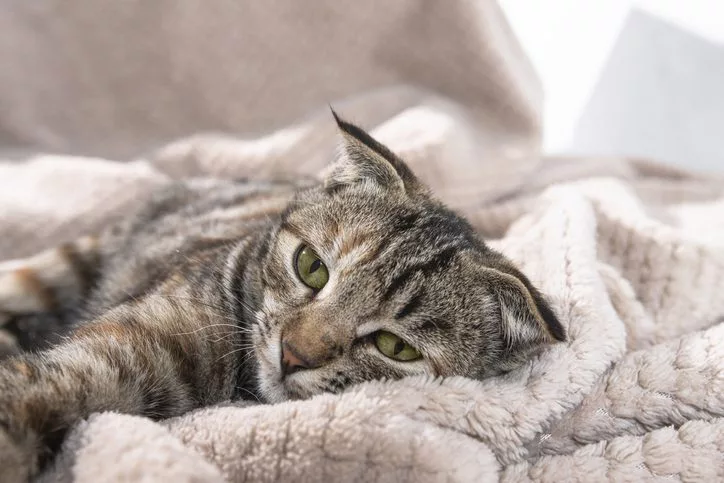
Veterinary researchers utilize specific facial metrics to evaluate discomfort in cats. Owners can observe similar markers at home:
-
Eyes that are tightly squeezed shut, squinted, or half-closed while awake
-
Ears rotated outward, flattened against the head, or angled downward
-
Whiskers pulled back tightly against the cheeks or held tense and straight
-
A tightly clenched muzzle with a downward-turned mouth line
Hunched Stance and Rigid Guarding
A comfortable cat rests in loose, fluid positions. Conversely, a cat in pain often adopts a tight, tucked-up posture. They may sit with their paws pulled firmly under their chest, their spine arched upward, and their head held low toward the floor. When resting on their side, their legs may appear stiff rather than relaxed. They will frequently guard specific body parts, shifting away immediately if an owner tries to touch their belly, back, or tail.
Changes in Grooming Habits
Cats are naturally clean animals that spend a significant portion of their waking hours grooming. Pain alters this routine in two distinct ways:
-
Under-grooming: Conditions like arthritis, spinal stiffness, or systemic illness make twisting and reaching difficult. The coat becomes matted, dull, greasy, or full of dander.
-
Over-grooming: Localized pain, such as neuropathic discomfort, skin infections, or urinary tract inflammation, can cause a cat to obsessively lick, bite, or chew at a specific area, resulting in bald patches, raw skin, or open sores.
Changes in Daily Routines and Vital Functions
Systemic distress disrupts fundamental physiological needs, including eating, drinking, moving, and eliminating waste.
Litter Box Abnormalities
Changes in litter box habits often stem from physical pain rather than behavioral spite. A cat with joint pain or hip dysplasia may find the tall walls of a standard litter box painful to step over, leading to accidents right outside the box.
Urinary blockages, particularly in male cats, represent a critical medical emergency. If a cat makes frequent trips to the box, strains, cries out while trying to eliminate, or passes little to no urine, they require emergency veterinary care immediately. A blocked urethra can become fatal within 24 to 48 hours due to toxin accumulation and potential bladder rupture.
Loss of Appetite and Water Intake
A sharp decline in food consumption, known as anorexia, is a serious sign of feline distress. Dental disease, fractured teeth, oral tumors, internal organ dysfunction, and severe nausea make eating uncomfortable or painful. If a cat goes without food for more than 24 to 48 hours, they face the risk of hepatic lipidosis, a potentially fatal liver condition triggered by rapid fat breakdown.
Mobility and Movement Changes
Pain directly impacts how a cat navigates their space. Pay attention to the following indicators:
-
Hesitation or refusal to jump onto furniture or high perches they previously managed easily
-
Using intermediate objects, like chairs or boxes, as stepping stones rather than leaping directly
-
Stiff, slow, or guarded movements upon waking up from a nap
-
A visible limp, favored leg, or altered gait while walking
-
Difficulty stepping over low barriers or navigating staircases
Critical Emergency Signs Requiring Immediate Veterinary Care
Some symptoms signal a acute, life-threatening emergency that leaves no time for monitoring at home. Transport your cat to an emergency veterinary clinic immediately if you observe any of the following:
-
Open-Mouth Breathing or Panting: Cats rarely pant like dogs. Open-mouth breathing, flared nostrils, or rapid chest heave indicates severe respiratory distress, cardiovascular failure, or extreme heatstroke.
-
Sudden Posterior Paralysis: If a cat suddenly loses the use of their hind legs, drags their rear body, and vocalizes in severe agony, they may have suffered a Saddle Thrombus (a blood clot blocking blood flow to the hind limbs). This condition is extremely painful and requires immediate intervention.
-
Unresponsiveness or Collapse: Inability to stand, disorientation, extreme lethargy, or loss of consciousness indicates acute systemic collapse.
-
Continuous Straining Without Urine Output: Immediate medical relief is needed to unblock the urinary tract.
-
Uncontrolled Bleeding or Major Trauma: Visible deep wounds, suspected bone fractures from falls, or suspected encounters with vehicles.
How to Safely Transport a Cat in Pain
A hurting cat is prone to biting or scratching defensively, even toward trusted owners. To move a distressed cat safely:
-
Gently wrap the cat in a thick towel or blanket to limit movement and protect yourself from sudden swats.
-
Lift the cat by supporting their chest and hindquarters evenly; avoid applying pressure to the abdomen or pulling on limbs.
-
Place the wrapped cat into a sturdy, top-loading pet carrier lined with familiar bedding.
-
Keep the vehicle quiet, warm, and dark during the drive to the veterinary clinic to minimize stress factors.
Frequently Asked Questions
How do veterinarians evaluate pain levels in non-verbal animals?
Veterinarians use validated clinical assessment tools, such as the Glasgow Feline Composite Measure Pain Scale and the Feline Grimace Scale. These frameworks score specific physical criteria, including body posture, facial expressions, ear orientation, response to gentle pressure around wounded areas, and overall awareness of surroundings.
Is it safe to give a cat human over-the-counter pain medications in a pinch?
No, never give a cat human pain medications like acetaminophen, ibuprofen, or aspirin. Cats lack key liver enzymes needed to metabolize these compounds. Even microscopic doses of human pain relievers can cause severe toxicity, catastrophic liver damage, kidney failure, red blood cell destruction, and death.
Do cats experience phantom limb pain after an amputation surgery?
Yes, cats can experience phantom limb pain and neuropathic sensations following surgical limb amputation. Veterinary surgeons manage this potential outcome by administering multimodal nerve-blocking medications before, during, and after the procedure to prevent long-term spinal cord pain sensitization.
Can chronic environmental stress cause physical pain symptoms in cats?
Yes, chronic stress triggers real physiological pain in felines. Prolonged psychological distress elevates inflammation markers throughout the body and frequently leads to conditions like Feline Idiopathic Cystitis, a painful, sterile inflammation of the bladder lining that causes severe discomfort during urination.
Does a cat’s age alter their physical sensitivity to pain?
Age does not lessen a cat’s ability to feel pain, but senior cats often express it differently due to cognitive changes or concurrent health conditions. Older cats frequently suffer from chronic conditions like osteoarthritis, which creates a high baseline pain level that can hide acute pain from new injuries.
How long can a cat safely go without eating due to pain before internal damage occurs?
A cat should not go without food for longer than 24 to 48 hours. Extended fasting forces the cat’s body to rapidly send fat stores to the liver for processing, which can trigger hepatic lipidosis, a dangerous liver failure condition requiring aggressive veterinary treatment.
Can a sudden change in diet cause pain severe enough to need emergency treatment?
Yes, rapid dietary shifts can cause acute gastrointestinal distress, including severe abdominal cramping, painful gas accumulation, continuous vomiting, and bowel impaction. If a sudden diet change leads to intense lethargy, constant crying, or visible abdominal guarding, veterinary intervention is necessary.